
Energy Savings Calculator
0203 193 8888


0203 193 8888
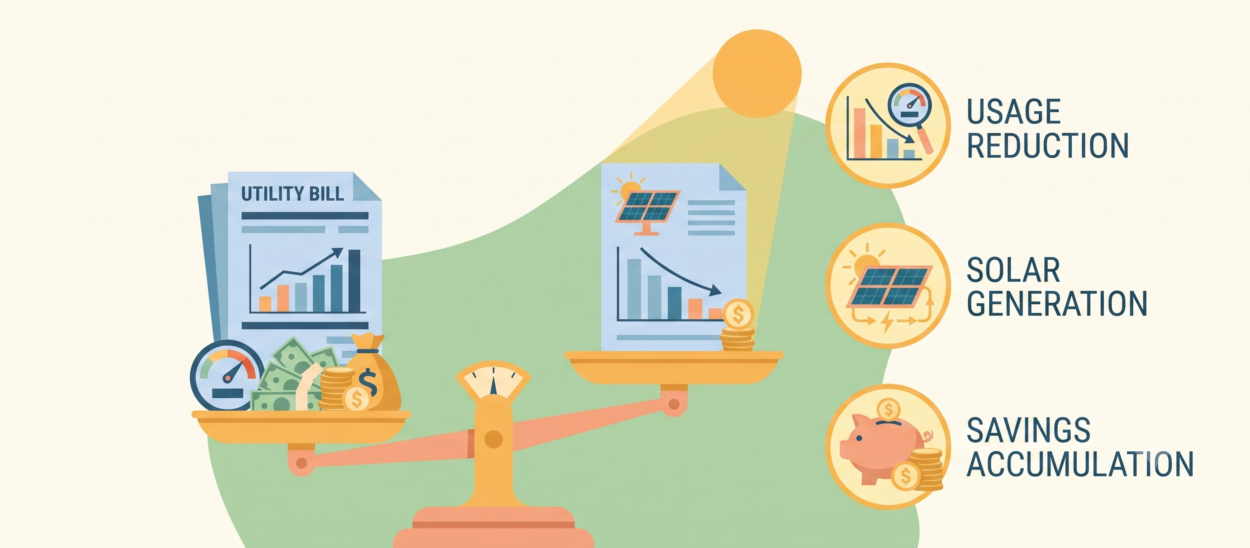
With UK electricity prices remaining stubbornly high, the prospect of generating your own power at home has never been more appealing. The good news is that the savings are real and, for most South East England homeowners, substantial. A typical household installing solar panels can save between £300 and £700 per year on electricity bills, and that figure rises further when battery storage or Smart Export Guarantee income is included. This article covers everything you need to know: how self-consumption drives your savings, how a battery changes the equation, what the Smart Export Guarantee pays, and why your location in the South East puts you at a particular advantage. Every home is different, so we will also show you how to estimate your own scenario, and you can always request a personalised quote from The Solar Co for figures tailored to your property.
How Solar Panels Reduce Your Energy Bills
The core principle behind solar savings is self-consumption: every unit of electricity your panels generate and you use at home is one unit you no longer need to buy from the grid. At current UK rates of around 26p per kWh, that is a meaningful saving every time your kettle boils, your washing machine runs, or your dishwasher completes a cycle during daylight hours.
It is worth being clear that the majority of your solar savings are avoided spending rather than direct income. The more energy-intensive tasks you can shift to daytime hours, the greater the benefit, because you are replacing expensive grid electricity with free solar power. Households where someone is at home during the day typically see the highest self-consumption rates.
A typical 4kWp system installed in the South East generates around 3,400 to 3,800 kWh of electricity per year, which represents a significant proportion of the average household’s annual consumption. To put that in concrete terms: if a household uses 3,500 kWh per year and self-consumes 40% of its solar output, it saves roughly 1,400 kWh, worth approximately £364 at current electricity rates. That figure alone illustrates why solar panels have become one of the most popular home improvements across the region.
Average Annual Savings: What UK Homeowners Can Expect
The table below gives a useful starting point for the savings most South East homeowners can expect, though individual results will vary.
These are averages, and your individual result will depend on how much energy you use, when you use it, your current electricity tariff, and the specifics of your roof. The key takeaway is that solar panels deliver genuine, lasting bill reductions, not marginal gains, and that adding battery storage meaningfully amplifies those savings for most households.
Key Factors That Affect Your Savings
Understanding what drives solar savings helps you set realistic expectations and make the right decisions for your home. The main variables are:
Solar Panels With and Without a Battery: How the Savings Compare
This is the question most homeowners ask once they understand the basics, and the honest answer is that battery storage makes a significant difference for the majority of UK households.
Without a battery, any solar electricity your panels generate that you do not immediately use is exported to the grid. During peak generation hours in the middle of the day, many households are out at work, which means a large proportion of their solar output earns only a modest export payment rather than replacing expensive grid electricity. This limits the potential bill savings considerably.
With a battery, that surplus generation is stored and then used in the evening, precisely when UK families tend to consume the most electricity. The alignment of supply and demand is what makes battery storage so financially compelling. A 4.5kWp system saves approximately £554 per year without a battery, rising to around £943 per year with one, based on 2026 Sunsave data. That is an additional £389 per year in bill savings from the battery alone.
A home battery typically adds between £2,000 and £4,000 to the total system cost, which does extend the overall payback period. However, it also significantly increases lifetime savings, making it the right choice for many households, particularly those where both adults are at work during the day and evening energy use is high.
Earning From the Smart Export Guarantee (SEG)
On top of the bill savings from self-consumption, homeowners with a solar system can earn additional income by exporting surplus electricity to the grid through the Smart Export Guarantee (SEG). This is the government-backed scheme that replaced the old Feed-in Tariff and requires licensed energy suppliers to pay a competitive rate for every unit you export.
SEG rates vary between energy suppliers, ranging from around 3p to over 20p per kWh in 2025. Ofgem data shows the average export tariff paid in 2024 to 2025 was around 13p per kWh. The best rates are often offered to existing electricity customers of a given supplier, so it is worth shopping around when your system is commissioned.
On average, UK homeowners with a solar system can earn between £50 and £500 per year through SEG, depending on system size, how much they export, and which tariff they select. However, it is important to remember that every unit used at home (saving around 26p) is worth roughly twice as much as every unit exported (earning around 13p). Maximising self-consumption should always be the priority, with SEG income treated as a welcome bonus rather than the primary financial driver.
Does Location Matter? South East England vs. the Rest of the UK
Location matters more than many homeowners realise. The South East of England receives more annual sunlight hours than almost any other region of the UK, which translates directly into higher electricity generation and faster payback periods for solar systems installed here.
South East homeowners typically see payback periods of 6 to 7 years, compared with 8 to 9 years for comparable systems in northern England or Scotland. Over a 25-year system lifespan, the regional advantage can represent several thousand pounds in additional cumulative savings. A South East installation can generate over £200 more in annual value compared with an equivalent system installed further north.
The Solar Co specialises exclusively in the South East, which means every survey, design, and installation is optimised for the specific conditions of the region. Customers benefit directly from this local expertise alongside the inherent solar advantage their geography provides.
How to Maximise Your Solar Panel Savings
Generating solar electricity is only half the story. Getting the most financial benefit from your system comes down to how intelligently you use what you generate. Here are the most effective strategies:
Frequently Asked Questions
How much can solar panels save on my electricity bill each year in the UK?
A typical UK household with a 3 to 4kWp solar system can save between £300 and £500 per year on electricity bills through reduced grid consumption. Adding battery storage raises this to £500 to £700 or more. These figures are based on self-consumption savings at current electricity rates of around 26p per kWh. Your actual savings will depend on your system size, how much energy you use during daylight hours, and your electricity tariff.
Do I save more money if I add a solar battery?
Yes, significantly. A battery stores surplus daytime solar electricity for use in the evening, increasing the proportion of solar power consumed at home from around 30 to 50% without a battery to 60 to 80% with one. Based on Sunsave’s 2026 research, a 4.5kWp system with a 2.5kW battery saves around £943 per year, compared with approximately £554 without a battery. The battery typically adds £2,000 to £4,000 to the system cost, but the additional annual savings often justify the investment over the system’s lifetime.
How does the Smart Export Guarantee affect my total savings?
The Smart Export Guarantee (SEG) pays you for every unit of surplus solar electricity you export to the grid. Rates range from around 3p to over 20p per kWh depending on your supplier, with the Ofgem-reported average around 13p in 2024 to 2025. Most homeowners earn between £50 and £500 per year through SEG. This income adds to your bill savings but is worth less per unit than what you save by using electricity directly at home, so maximising self-consumption remains the higher-value priority.
Does the South East get enough sunshine to make solar panels worth it?
Absolutely. The South East of England receives more annual solar irradiance than almost anywhere else in the UK, making it one of the best regions in the country for solar panel performance. A typical 4kWp system here generates 3,400 to 3,800 kWh per year. Payback periods are typically 6 to 7 years, shorter than the UK average, and lifetime savings are correspondingly higher. Even on overcast days, modern solar panels continue to generate electricity, just at a reduced rate.
How long before solar panels pay for themselves?
For a South East homeowner, the typical payback period is 6 to 7 years for a solar-only system and 8 to 10 years when battery storage is included, reflecting the higher upfront cost. After payback, the system continues to generate free electricity for the remainder of its 25-year-plus lifespan. Choosing a reputable MCS-certified installer such as The Solar Co, keeping maintenance costs low, and optimising your tariff all help to shorten the payback period and maximise lifetime returns.
Conclusion
Solar panels offer UK homeowners a reliable, long-term route to lower electricity bills, and the South East is one of the best places in the country to benefit. A typical system can save between £300 and £700 or more per year on energy costs, with additional income of £50 to £500 per year available through the Smart Export Guarantee. Adding battery storage meaningfully increases those returns by aligning your solar generation with your household’s peak consumption period.
South East homeowners enjoy a genuine geographic advantage: more sunlight hours, higher annual generation, and shorter payback periods than most of the UK. Combined with falling system costs and rising electricity prices, the financial case for solar has never been stronger in this region.
Every home is different, and the figures quoted here are averages. The most reliable way to understand what solar could save you specifically is to speak with a specialist who can assess your roof, usage patterns, and current tariff. The Solar Co offers free, no-obligation surveys and personalised savings estimates for homeowners across the South East.
Get Your Free Solar Quote from The Solar Co
Back to Blog