
Energy Savings Calculator
0203 193 8888


0203 193 8888
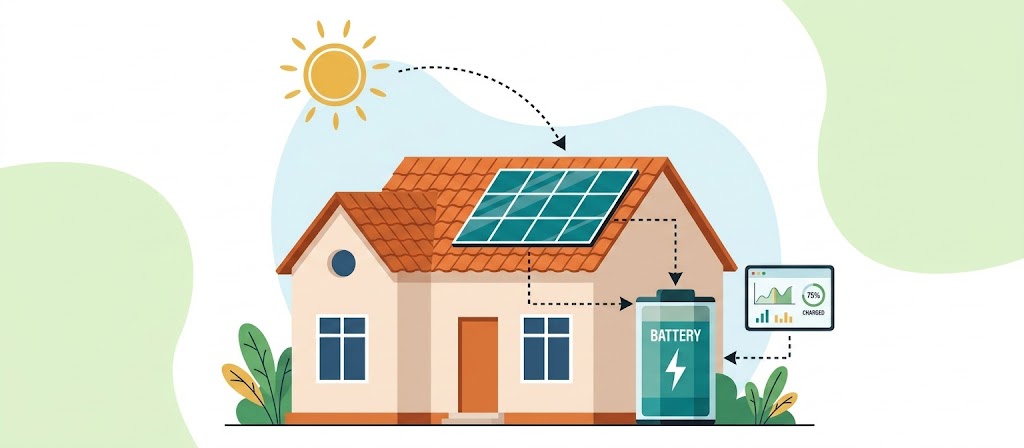
On the 7th April 2026 the UK recorded its highest ever amount of energy produced by solar panels, generating over 14 gigawatts of power that day which accounts for 35% of the country’s needs. That sunny Spring day shows just how much energy solar power can produce – even in a temperate country like ours. And if you live in the South East, you’re in one of the best parts of the UK to take advantage of it.
The sun doesn’t always shine but even so, solar systems are an increasingly important part of our energy mix – and in the South East UK we get some of the highest sunshine hours in the country.
In this article we will look at why South East England is good for solar panels, touching on:
…And issues like planning permission and what could slow your solar generation down. Thinking about going solar in the South East? Get a free, no-obligation assessment from The Solar Co and find out exactly how much your home could generate.
Thanks to higher-than average sunshine hours and its southerly location in the UK, South East England has among the best solar irradiance in the country. This amounts to 1,600-1,900 hours a year vs the national average of 1,340 hours. This makes the South East one of the best regions in the UK for solar..
Brighton is among the brightest spots in the South East. Here, a south-facing roof at a 40º angle can generate around 1,132 kilowatt hours (kWh) per kilowatt-peak solar panel. This is head and shoulders above the UK average of 900kWh/kWp. In other parts of the region, Hampshire solar panels can generate 990kWh per kWp.
‘Solar irradiance’ is the measure for how much radiation from the Sun reaches a surface in a given area. Measured in Watts per square metre (Wm⁻²), solar irradiance South East England often exceeds 128Wm⁻² vs 72Wm⁻² in the North West of Scotland. This is why solar panels perform so well in the South East compared to the rest of the UK.
In a nutshell, yes they do. Studies show that on a typical day, a solar array will generate 20% less in light overcast conditions rising to 60% less under heavy cloud – perhaps under a dark, heavy thundercloud ahead of a summer deluge.
Solar panels need daylight not direct sunlight to operate. This is why Germany, a country on a similar latitude to us with similar solar irradiance to the UK, is one of the world’s largest solar markets.
Where we are in the world has another advantage when it comes to installing a home solar array – the winds and cool air improve the efficiency of solar panels. According to Solar Energy UK, they operate best at temperatures of 25ºC. In Greece or Turkey for example where temperatures regularly exceed 40ºC in summer, they are less efficient than solar panels South East England.
A well-sized solar system can generate a significant proportion of a typical household’s annual electricity use.
| Region | Annual Output (kWh/kWp) | Notes |
| South East England | Up to 1,100 kWh/kWp | Among the highest in the UK |
| Midlands / North England | 950–1,000 kWh/kWp | UK average range |
| Scotland | 850–900 kWh/kWp | Lowest in the UK |
In hard numbers:
Solar panels South East England produce up to 1,100kWh per kWp panel installed per year. By comparison, in the Midlands and North England this falls to 950- 1,000kWh and in Scotland this is 850-900kWh per kWp.
This isn’t evenly spread – you will generate more in June and July than you will in December and January for example. Thanks to the Smart Export Guarantee, you will sell your excess energy to the grid in summer and make some of your energy bills back but in winter when the solar irradiance is lower you will use all the energy generated, saving on energy bills.
Not all homes are the same. The direction the roof faces is important – for example:
The ideal roof pitch for the UK is around 30–35 degrees, though most standard roof pitches perform well.
In the South East, most homeowners can realistically save £700–£1,200 per year on electricity bills with a solar array. These factors include:
If you install a home battery you can typically cover 70-90% of your annual energy use using self-generated power. Without a battery this falls to 30-50%, though you can make money back on a good export tariff from your energy provider.
Under the national Smart Energy Guarantee you can sell excess energy to the grid at rates varying from 4p/kWh to 15p/kWh, and with a battery can sell at peak demand times to maximise your income.
A home’s Energy Performance Certificate (EPC) can affect its attractiveness to potential buyers, and a 3-4kWp south-facing system can often move a home from a EPC band D to a C.
Typically, a 3-4kWp solar system can cost £5,000-£7,000 including installation. If you have a battery installed this will add a further £3,000-£6,000 depending on the capacity. Installation costs in the South East are typically 5–10% higher than the UK average. This reflects higher regional labour costs.
Most South East systems pay for themselves within 6–10 years. With panels lasting 25–30 years, that leaves 15–20+ years of effectively free electricity after payback as can be seen in the table below:
| System Size | Typical Cost (South East) | Est. Annual Savings | Payback Period |
| 3 kWp | £4,500–£6,000 | £600–£800 | 8–10 years |
| 4 kWp | £6,000–£7,500 | £800–£1,100 | 7–9 years |
| 4 kWp + Battery | £9,000–£13,000 | £1,200–£1,500 | 8–11 years |
Want to know what a solar system could save you? Our team at The Solar Co will assess your roof, system size, and usage to give you a personalised quote.
The South East has some of the sunniest counties in Great Britain. Among these:
By comparison, some parts of Northern Scotland see just 1,250 hours of sunshine a year, with an impact on the solar irradiance solar panels receive. However, the exact output of any home’s solar system will be impacted by a variety of factors – perhaps a tall tree nearby could shade it for example, or the direction that the array faces.
No two solar systems are the same and there are factors that impact how they perform. These include:
North-facing roofs are generally not recommended as they generate less than 50% of a south-facing equivalent.
Planning permission is something that worries a lot of people but in most cases, solar panel installations in the South East do not require planning permission. They are classed as ‘permitted development’ in most cases, as long as they meet standard size and positioning requirements.
There are a few exceptions though:
If you’re unsure, your local authority can advise without having to pay out for planning consent.
Grid connection is handled by your MCS-certified installer, who will handle all relevant grid connection notifications (G98 or G99) as part of the installation process.
Is the South East really one of the best regions in the UK for solar?
Yes. The South East consistently ranks among the top-performing UK regions for solar energy generation, benefiting from above-average sunshine hours and solar irradiance levels. Brighton, for example, produces around 1,132 kWh per kWp annually — 25% more than the UK midpoint.
Do solar panels work in winter in the South East?
Yes, though output is lower. Shorter days and a lower sun angle mean winter generation is reduced, but your panels will continue producing electricity from daylight throughout the year. A battery can help you make the most of any surplus generated during the day.
What if my roof doesn’t face south?
South-facing is ideal, but it’s not essential. Southeast and southwest roofs lose only around 3–4% of potential output. East and west-facing roofs still generate around 65–80% of a south-facing equivalent, and in many cases remain a strong investment — especially when paired with battery storage.
How long do solar panels last?
Modern solar panels typically come with 25-year performance warranties and often continue generating electricity for 30 years or more. The inverter usually needs replacing after around 10–12 years.
Can I earn money from my solar panels?
Yes. The Smart Export Guarantee (SEG) pays you for surplus electricity you export back to the grid. Rates vary by supplier, currently ranging from around 4p to 15p per kWh. You’ll need a smart meter to participate.
For homeowners in the South East, the answer is a clear yes. The region’s above-average sunshine hours, strong solar irradiance, combined with rising electricity prices for solar investment anywhere in the UK. A well-designed system can generate enough electricity to cover a significant portion of your household’s annual usage, and pay for itself within 6–10 years — leaving you with decades of effectively free, clean electricity.
Whether your roof faces south, southeast, or east-west, The Solar Co can assess your home and design a system that works for your roof, your usage, and your goals. Ready to make the most of South East England’s solar potential? Contact The Solar Co today for a free home assessment and find out how much you could save.
Back to Blog