
Energy Savings Calculator
0203 193 8888


0203 193 8888
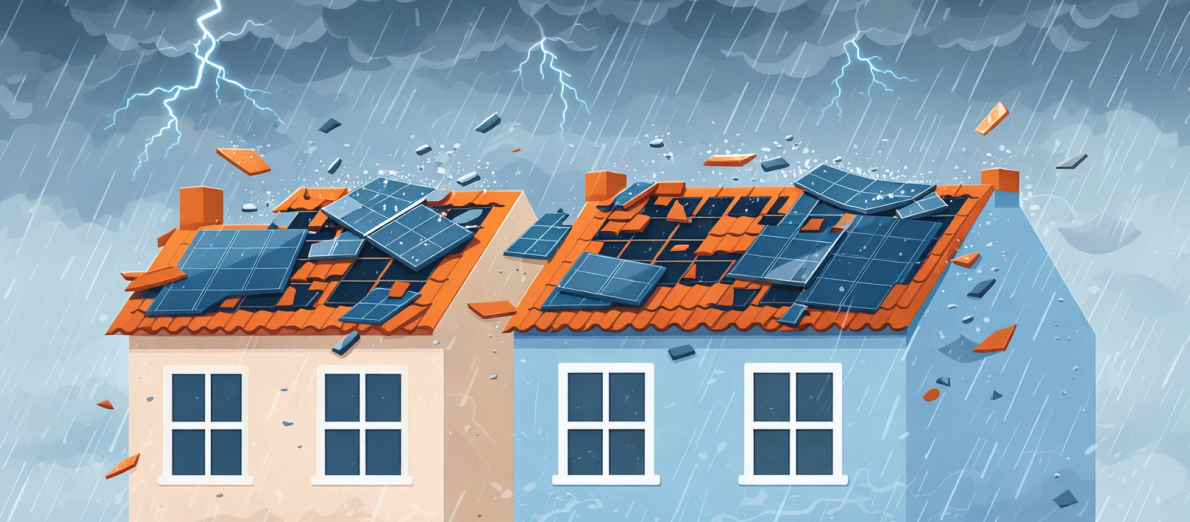
“Wettest start to a year on record to cost homeowners up to £55,202 in average home value”
Amid the highest number of consecutive rainy days recorded in the UK during the first months of this year, a roofing and solar panel expert is warning that hidden roof damage could be knocking an average of £55,202 off property values + £3,512 up to £7,500 repair bills – affecting 16 million vulnerable homes (pre-1919 / Victorian terraces, post-war properties, and homes with flat roofs).
Up on the rooftops of homes this month we’re beginning to notice the impact that persistent rain is having on housing.
Poor roofing conditions, from damaged tiles to clogged gutters, can result in very costly damage to homes, with water leaks as well as damp and mould creating costly problems to fix.
Roofing defects are among the most common issues flagged in property surveys, and when urgent repairs are identified, buyers often reduce offers to cover the full cost of work – typically knocking 10 – 20% off the asking price.
And based on the current UK average house price of £368,019, according to data from Rightmove, a damaged roof caused by rainfall could therefore mean £55,202 (£36,802 – £73,604) lost in value when selling a property.
In addition, homeowners fixing roofing problems themselves will need to expect to pay around £3,512 for repairs, and up to £7,500 for a full roof replacement.
What’s more, if a problem is not spotted quickly, insurers may be less inclined to pay out for any claims for roof repairs. Insurers will typically pay out for claims that occur as a result of roof damage from sudden, unexpected events, such as storm damage.
However, damaged tiles from persistent rainfall over a long period, if not spotted early, could be classed as ‘wear and tear’, reducing the likelihood of an insurance pay out.
The extent to which rooftops may be facing damage largely depends on the roof’s age, which is why it’s crucial that Brits check how old their roof is as soon as possible.
An estimated 16 million homes fall into the three property types most vulnerable to roof damage, pre-1919 / Victorian terraces, post-war properties, and homes with flat roofs – meaning homeowners in these properties should be particularly wary.
Around 5 million homes in England were built before 1919, with many still having original or ageing slate roofs, older fixings and mortar-bedded ridge tiles.
Over time, nail fixings corrode and mortar deteriorates, making these properties especially prone to slipped tiles and water ingress during persistent wet weather.
An estimated 7 million homes were built between 1945 and 1980. These properties commonly use interlocking concrete tiles and traditional felt underlay – materials that typically have a lifespan of 40 to 60 years.
Many are now reaching or exceeding that threshold, increasing the risk of cracking, tile porosity and underfelt failure during sustained rainfall.
There are up to 4 million UK properties with a flat-roof element. Such roofs are particularly vulnerable to damage from persistent rain, which can cause membranes within roofing materials to degrade and leakages at seems – causing significant damage to homes.
The financial impact of prolonged rainfall can escalate quickly if roofing issues go undetected.
Minor and moderate repairs alone can add up quickly, costing the average homeowner around £3,513. However, in more severe cases, a full roof replacement could set homeowners back around £7,500 on average.
If leaks lead to internal damage, such as soaked insulation, timber rot, ceiling collapse or mould, homeowners may also face thousands of pounds in additional repair costs.
Typical roof repair costs include:
The private rental sector accounts for around 4.7 million homes in England, and consistently records higher levels of disrepair and damp compared to owner-occupied housing. Where routine maintenance is delayed, minor roof defects can escalate rapidly during wet winters.
Those that are renting should also keep an eye out for the 5 signs of roof damage as, under the Environmental Protection Act 1990, local authorities have powers to intervene where property defects become prejudicial to health.
If damp or mould linked to a leaking roof is deemed a statutory nuisance, councils can serve formal notices requiring repairs. Failure to comply can ultimately result in civil penalties for failing to address serious hazards of up to £30,000.
Back to News