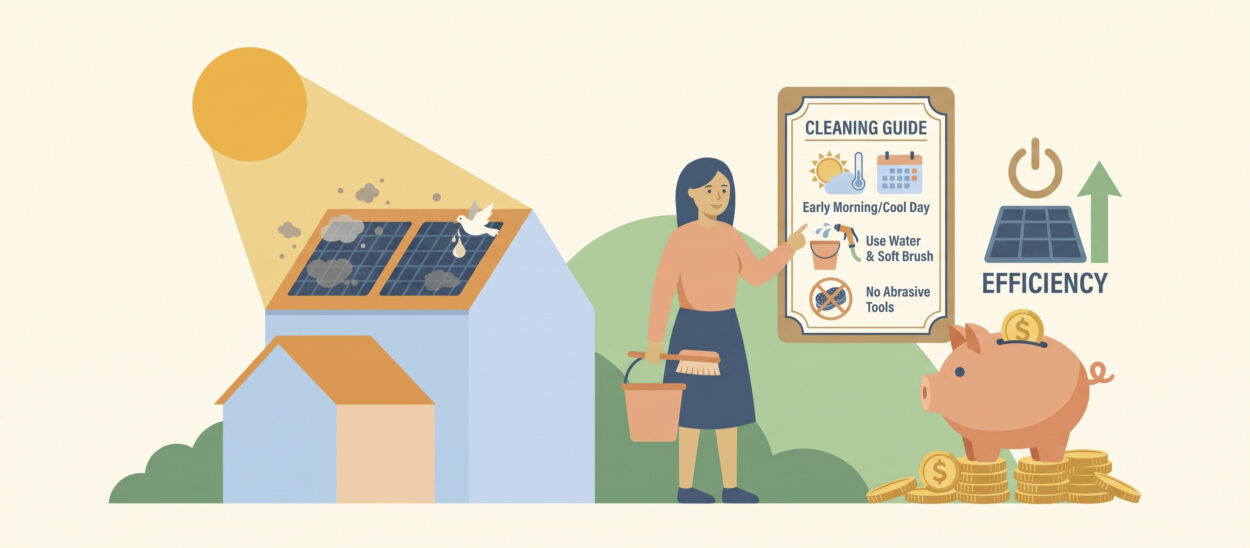
Solar panels are a significant investment, and it is completely natural to want to keep them in the best possible condition. The good news is that in the UK, heavy rainfall does much of the cleaning work for you. However, certain situations, such as persistent bird fouling, a nearby tree dropping pollen and debris, or panels in an urban or high-pollution area, do warrant a manual clean. This guide covers everything you need to know about cleaning solar panels safely in the UK:
- The right tools, the ideal timing,
- A clear step-by-step process
- How to decide when it makes more sense to call in a professional.
Do Solar Panels Actually Need Cleaning in the UK?
For most homes, the natural wash of rain removes surface dust and light soiling without any intervention needed. However, rain alone does not cover every scenario.
Manual cleaning becomes worthwhile in the following situations:
- Heavy bird fouling that has dried and caked onto the panel surface
- Overhanging trees that deposit pollen, sap, or leaf debris onto the glass
- Properties in urban or high-traffic areas where airborne pollution settles consistently
In the worst cases, soiling can reduce panel output by up to 10%, which can have a noticeable impact on your generation figures and your electricity bill savings. For most UK homes, one to two cleans per year strikes the right balance between effort and benefit. If your panels look clear and your monitoring data shows healthy output, there is no need to clean more frequently.
What You Will Need (Tools and Equipment)
Using the correct tools is essential, both to avoid damaging your panels and to keep your warranty intact. Here is what you will need for a safe DIY clean:
- A telescopic extension pole with a soft-bristle brush head, which allows you to reach panels from the ground without going onto the roof
- Pure or deionised water, rather than tap water. Tap water contains minerals that leave streaks and deposits on the glass, which can reduce performance over time. Deionised water dries without residue.
- A gentle, non-abrasive sponge or squeegee attachment for removing stubborn residue once the initial rinse is done
- A garden hose set to a low-pressure spray, or a dedicated water-fed pole system if you plan to clean regularly
There are also some things you should avoid:
- Pressure washers can crack panel glass or force water into junction boxes
- Abrasive pads will scratch the anti-reflective coating
- Bleach-based or chemical cleaning products can corrode seals and damage the frame.
Any of these can void your manufacturer’s warranty, so stick to soft tools and pure water.
When Is the Best Time to Clean Solar Panels?
Cleaning at the right time makes a practical difference. The main considerations are temperature, season, and the current condition of your panels.
- Clean in the morning or evening, or on an overcast day. Cold water hitting a panel that has been heating up in direct sun can cause thermal shock, stressing the glass over time.
- Spring and autumn are the ideal seasons. A spring clean removes winter grime and prepares your system ahead of peak summer generation. An autumn clean clears away leaf deposits before the shorter, lower-light days of winter.
- Avoid cleaning immediately after rainfall. Panels may still be damp, and residue can redeposit as they dry if cleaning begins too soon.
- Check your monitoring app or inverter data before you start. If the output is looking healthy for the time of year, your panels may not need cleaning yet, and you can save yourself the effort.
Step-by-Step Guide to Cleaning Solar Panels Safely
Follow these steps in order for a safe and effective clean:
- Switch off your solar PV system at the isolator switch before you begin. Panels are live whenever light is present and could produce potentially dangerous voltages, so isolating the system is non-negotiable.
- Inspect the panels visually from the ground to identify the worst-affected areas. This helps you target your efforts without making unnecessary passes over clean sections.
- Rinse the panels gently using a low-pressure hose or water-fed pole. This loosens and removes most loose debris before any scrubbing begins.
- Apply a soft brush dipped in deionised water to scrub away bird droppings, pollen, or grime. Use gentle circular motions and avoid pressing hard against the glass.
- Rinse the panels a final time with pure water. If streaks are a concern, use a squeegee to draw the water cleanly off the surface before it dries.
- Switch your solar system back on and check your monitoring app or inverter display to confirm that output has returned to the expected level.
Safety Precautions You Must Follow
Solar panel cleaning involves two real hazards: electricity and working at height. Both must be taken seriously.
- Panels generate electricity in any daylight and can produce voltages up to 600V. Always isolate the system at the main isolator switch before you start, and never touch any wiring, connectors, or junction boxes.
- Work from the ground wherever possible using a telescopic pole. Going onto your roof without proper fall protection is a serious risk. Homeowners are not typically equipped with the safety harnesses and anchor points that professional roofers use.
- Do not clean on windy days or if the roof surface is wet and slippery. Both conditions significantly increase the risk of a fall.
- Check your warranty terms before carrying out any cleaning. Some manufacturers specify that cleaning must be carried out by a professional to maintain coverage.
- If your panels are on a two-storey roof, have a steep pitch, or have not been cleaned in more than two years, the safest option is to hire a professional with appropriate equipment and liability insurance.
DIY vs. Professional Solar Panel Cleaning
For many homeowners, DIY cleaning is a perfectly sensible choice. For others, hiring a professional is the safer and more practical option. Here is how to decide:
- DIY is a reasonable choice for single-storey homes with easily accessible panels. A water-fed pole kit costs around £150 to £300 and can be cost-effective after repeated use compared with professional visits.
- Professional cleaning typically costs between £80 and £200 per visit, depending on the size of your system and the ease of roof access.
- Professionals bring purified water systems,appropriate insurance, and will carry out a visual inspection of your wiring and mounting brackets while they are working, which may identify minor issues before they become costly problems.
- Hiring a professional is strongly advisable when panels are affected by lichen or moss, which requires specialist treatment and cannot safely be removed with a soft brush alone.
- Consider the return on investment. If heavy soiling is cutting your output by 8 to 10%, a £100 professional clean can recover enough lost generation to pay for itself within a single year.
How to Check if Your Panels Need Cleaning
Rather than cleaning on a fixed schedule, it is more efficient to clean when the evidence suggests it is genuinely needed. Here is how to assess your panels:
- Use your solar monitoring app or inverter display to track your daily and monthly generation against the expected output for the time of year. Most modern systems make this straightforward.
- A gradual, unexplained drop in output during a period of normal weather can point to soiling rather than a technical fault. If the generation has dipped by several percentage points without an obvious cause, a visual check is worth doing.
- Carry out a visual inspection from the ground. If panels look visibly coated in dark residue, pollen, or bird droppings, cleaning is overdue.
- For homeowners in South East England, where pigeons are a persistent problem in many areas, it is also worth considering bird-proofing measures alongside cleaning. Mesh and deterrent spikes fitted by a professional can significantly reduce the frequency of fouling.
Frequently Asked Questions
Can I use washing-up liquid to clean solar panels?
No. Most household detergents leave a soapy residue on the glass that attracts dirt and causes streaking. In some cases, the chemicals can also affect the anti-reflective coating. Deionised water used with a soft brush is sufficient for the vast majority of cleans. If you feel you need something extra, look for a solar panel-specific cleaning solution free of abrasives and harsh chemicals.
Will cleaning my panels void the warranty?
Using the wrong products or methods can do so, yes. Pressure washers, abrasive cleaning pads, and chemical products are the most common culprits. Always check your manufacturer’s guidance before you begin, and if in doubt, contact The Solar Co for advice on what is appropriate for your specific panels and setup.
How much does it cost to have solar panels professionally cleaned?
Professional solar panel cleaning in the UK typically costs between £80 and £200 per visit. The price varies depending on the size of your system, the pitch and height of your roof, and the ease of access. Some installers offer maintenance packages that include regular cleaning alongside an annual system health check, which can represent better value in the long run.
Do I need to turn my solar panels off before cleaning?
Yes, absolutely. Solar panels generate electricity in any daylight, including on overcast days. Before you begin any cleaning, switch the system off at the main AC isolator switch. This is usually located in the loft or utility room near your inverter. Avoid cleaning panels while the system is live.
How often should I clean my solar panels?
For most UK homes, once or twice a year is sufficient. Rather than following a fixed schedule, check your monitoring data and perform a visual inspection from the ground to judge whether cleaning is actually needed. A spring clean before peak summer generation and an autumn clean after leaf-fall are sensible starting points for most homeowners.
Conclusion
Keeping your solar panels clean doesn’t t need to be complicated. Rainfall does much of the work, but a twice-yearly clean using the right tools and techniques helps ensure your system continues to perform at its best throughout the year.
The key points to remember are:
- Use deionised water and soft tools,
- Clean in the morning or on an overcast day,
- Always isolate your system before you begin.
- Work from the ground wherever possible,
- If your panels are on a high or steeply pitched roof, leave it to the professionals.
If you are unsure about the condition of your panels, or if you would like to explore a maintenance package that takes the hassle out of upkeep entirely, The Solar Co is here to help. We work with homeowners across the South East of England, and looking after your system is just as important to us as installing it. Get in touch today to find out more about our cleaning and maintenance services, and take a look at our related guides on solar panel monitoring and getting the most from your system all year round.
Back to Blog