
Energy Savings Calculator
0203 193 8888


0203 193 8888
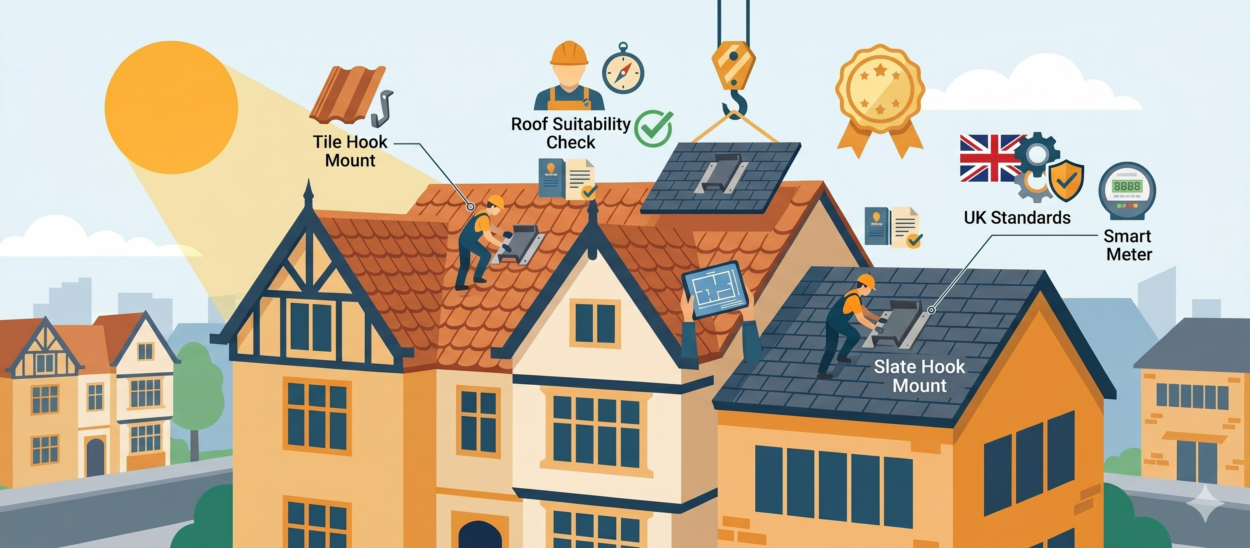
Solar panels and delicate roof materials may seem like a risky combination, but a team with the right skills and experience can install them safely without compromising the roof.
This guide will show you how a specialist installer will put the solar panels on your roof, what to expect during the process, and most importantly, why choosing the right installer is crucial. The Solar Co has South East England teams who can do this – contact us today for a solar panel quote.
When put in correctly, solar panels can be put on most slate and tiled roofs in the UK. It does require a high level of expertise and skill beyond what’s needed to install them on concrete or metal roofs. A team installing solar panels on slate or tiled roofs should have the specialist skills and experience to do it.
As part of the process, you should expect a pre-installation roof survey to assess the condition and structure of the roof tiles. In some cases, you may need to repair the roof before installing the panels, so that they remain in place for their expected lifespan.
There are five common roof tiles in the UK. All require different approaches to installing your system:
The site survey may reveal that some slates are cracked or brittle before the work begins on installing your solar system – the survey will show these issues.
Slate cracks easily. Solar panel installation teams prefer to use hooks that sit under the tiles and are fixed to a batten or rafter underneath it, avoiding surface penetration. This means that the weight of the solar system is transferred to the roof structure – not the tiles. The mounting rail system sits atop the hooks, providing alignment and structural support.
The hook shape must match the tile shape and thickness:
Particularly if the roof needs extensive repair, Solar PV Slates may be an option. Though these are more expensive, they serve as part of the roof structure, and can look almost identical to the roof slates they replace.
When it comes to fitting a solar system on a tiled roof, there are five stages to the installation process:
We will take a quick look at these stages below.
The roof survey:
During the process of putting up the solar system, the team needs a safe and secure work area to operate in. This is why scaffolding is necessary.
The tiles are selectively lifted or removed using a special tile ripper tool that slides under the tile, releases fixings, and lifts it without cracking.
When it comes to slate tiles, a good installer will minimise breakages and replace like-for-like as required.
Hooks are mounted through the gaps where the tiles have been lifted and fixed onto the roof structure (battens/rafters).
Tiles are then re-laid around the hook, sometimes after being trimmed or notched, so they sit flush, maintain a watertight finish and achieve an even surface profile. Poor cuts can allow water ingress, while misaligned tiles can create stress points that may lead to cracking over time.
Once the hooks are in place, the team will fix aluminium rails on the hooks, horizontally across the roof. These distribute the load across multiple fixing points and provide a flat, level mounting surface. The rails must be perfectly aligned, as even minor errors can become apparent once the panels are in place.
The team then place the solar panels on top and clamp them to the rails. From here, they wire the system into your home.
If done properly, the finished job should be fully weathertight, with no increased risk of leaks.
For a slate roof, this process can take 3-5 days, compared with 1-3 days on a standard roof due to the care required. This means that there will be additional costs.
A slate or tiled roof solar system installation will cost 15-30% more than a standard roof installation. In numbers, a typical 4kWp array will cost around £7,000-£8,000 at 2025 prices, where a slate or tiled roof system will cost £8,500-£10,500 depending on the system size and complexity.
The added costs involved come from:
The higher outlay will result in slightly longer payback time, but a similar savings potential over time to a typical solar installation. This includes the Smart Export Guarantee (SEG), which is available when it is put in by an MCS-certified installer.
When looking for an MCS-certified installer for your solar system, it is important to understand that not every company has the specialist teams to install one on a slate or tiled roof. When booking a survey, always ask about this, as it will save you time and energy.
Either before or during the survey, ask for case studies or photos of work that the team has done before. Also, check that they carry the appropriate liability insurance and can advise on sourcing the right tiles should breakages occur during the process.
The Solar Co has extensive experience with specialist roofing across the South East of England — ask us for case studies and photos before booking a survey of your home.
It might make sense to opt for Solar Slates as an alternative to solar panels. These are slightly less efficient but have a lower profile and a better aesthetic result. PV Slates, like those from GB-Sol, are MCS-certified solar panels designed to look and function like natural slates. Common uses include:
These can cost 1.5x or more than traditional solar panels, but the trade-off is a better look that could be more easily accepted by local planning committees. Where a major roof repair is necessary before installation, this added cost can be absorbed into the roof’s long-term viability.
No — when installed correctly, solar panels should not damage a slate roof. Installers use specialist hooks that slide beneath the tiles and fix into the roof structure without drilling through the slate itself. The main risk comes from poor installation practices, which is why choosing an experienced, certified installer is essential.
Yes — Victorian terraces with slate roofs are a common and suitable option for solar. A professional installer will assess the condition of the slate and the underlying roof structure during the survey. Still, in most cases, these properties can support a well-designed solar system without issue.
Not necessarily. If your roof is in good condition, solar panels can be installed without any additional work. However, if tiles are already brittle, slipping, or nearing the end of their lifespan, it’s often more cost-effective to carry out repairs or a partial re-roof beforehand rather than removing and reinstalling panels later.
In most cases, no — provided the system is installed correctly using approved methods. Reputable installers use non-invasive fixings designed to work with the roof covering. However, warranty terms can vary, so it’s always sensible to check with the manufacturer or installer before proceeding.
Yes — solar PV Slates are designed to blend in with traditional slate roofs, offering a more discreet appearance. They’re particularly popular on period properties or in conservation areas. While they tend to be more expensive and slightly less efficient than standard panels, they are MCS-certified and still eligible for Smart Export Guarantee payments.
Don’t write off the idea of having solar panels installed if you have a slate or tiled roof. This means choosing an installer with the right expertise. The Solar Co specialises in this type of installation across the South East of England – contact us to book a free, no obligation roof survey to find out what’s possible at your property.
Back to Blog